By Thirty World Team · Aug 4, 2026 · 5 min read
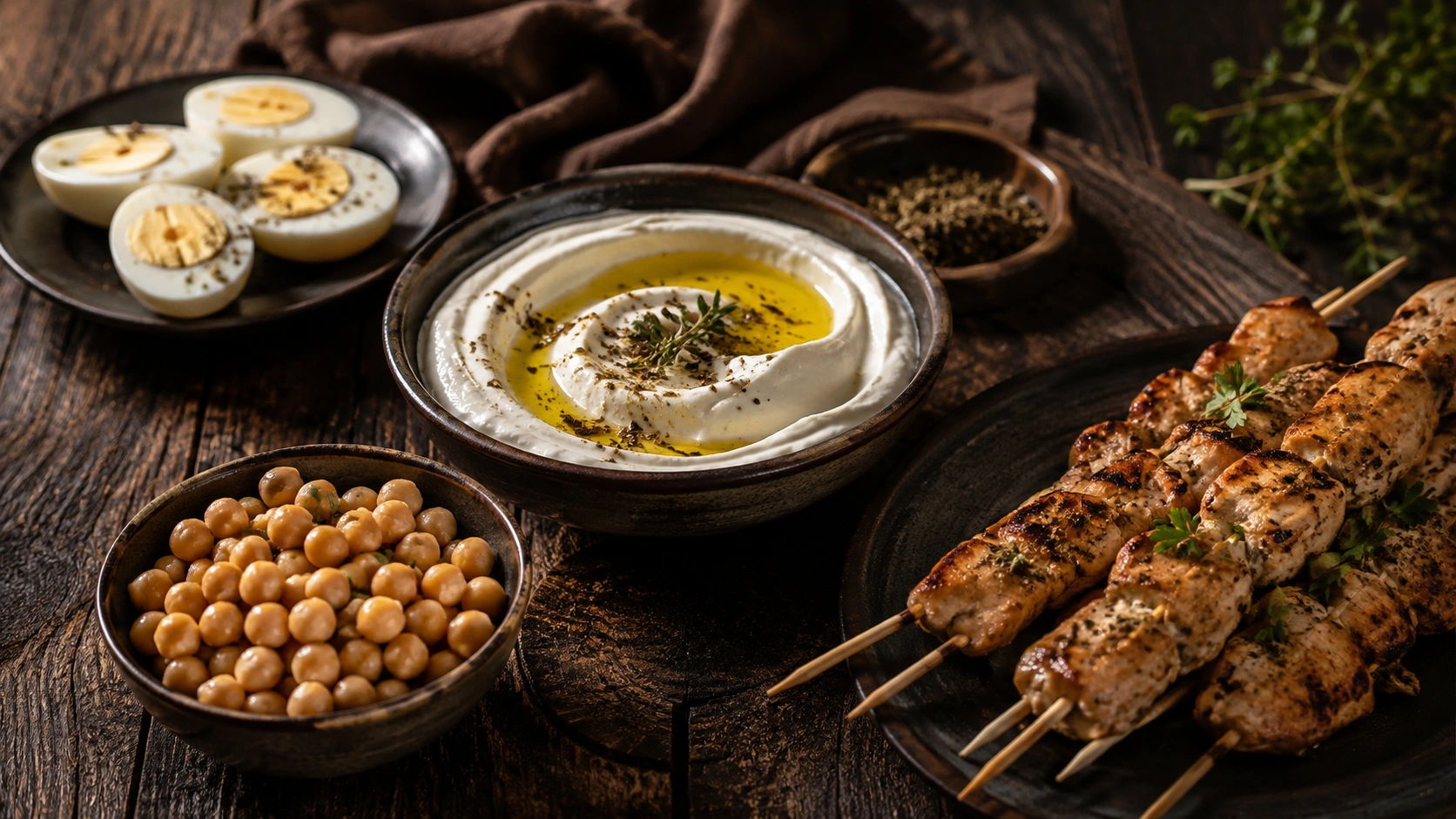
The internet's answer is "more." The research is calmer. A daily target you can calculate in ten seconds, and what it looks like on a Lebanese table.
Every conversation about training food eventually lands on the same question: how much protein? Ask the internet and the answer is "more," delivered at various volumes. Ask the research and the answer is calmer, smaller than the influencers claim, and bigger than most people actually eat. Here's the number, and here's what it looks like on a real table.
For people who train, the range used across most sports-nutrition research is roughly 1.6 to 2.2 g of protein per kilogram of body weight per day. A 70 kg lifter lands around 110 to 155 g a day. An 85 kg lifter, around 135 to 185 g. Anywhere in that range supports muscle growth and recovery when the training is actually happening; the top end mostly buys insurance during hard dieting phases.
Two honest notes. First, this is education, not a prescription, and anyone managing a medical condition should get their targets from their doctor, not from us. Second, if you don't train, your needs are far more modest, and no shop should be talking you out of that.
Numbers are rough and portions are honest guesses, but this is the order of magnitude:
| On the plate | Protein, roughly |
|---|---|
| Chicken breast, palm-sized | 30 to 35 g |
| Can of tuna | 25 g |
| Three eggs | 18 g |
| Bowl of lentils, cooked | 18 g |
| Labneh, a proper bowl | 10 to 14 g |
| Halloumi, a few slices | 15 g |
| Cup of cooked chickpeas | 14 g |
Stack a normal good day: eggs and labneh in the morning, chicken and rice at lunch, lentils at dinner, and you're at roughly 90 to 100 g without trying anything heroic. For a smaller person, that's most of the job done by groceries. For an 85 kg lifter chasing 160 g, there's a gap, and the gap shows up every single day.
That daily gap is the entire reason protein powder exists. A scoop of whey is 20 to 25 g of protein with good logistics: no cooking, no planning, works at a desk, costs less per serving than most protein-heavy snacks. It's not better than food. It's more convenient than food, and on a busy week convenience is what decides whether the target gets hit.
So the honest sequence is: calculate your range, count a normal day of your actual eating, and buy a tub only if the arithmetic says you're chronically short. Some people run this exercise and discover they don't need us for protein at all. Good. That's the system working.
Distribution matters less than the total, but it's not nothing. Three to four protein-containing meals spread across the day is the pattern research keeps favoring, conveniently the way most people already eat. What actually sinks targets is the classic skipped-breakfast, tiny-lunch, giant-dinner shape, which asks one meal to carry 80 g and usually loses.
And the total counts on rest days too. Recovery doesn't check your training calendar.
Pick a target between 1.6 and 2.2 g per kilo, hit most of it with food, and let a scoop cover the daily gap. The target you hit every day beats the perfect one you hit twice a week.
question: Is a high protein intake bad for my kidneys? answer: In healthy people, intakes in the ranges above are well studied and haven't shown the damage the old myth promises. If you have a kidney condition, that's a conversation with your doctor, not an article. question: Do I need protein on days I don't train? answer: Yes. The building and repair you trained for happens across the following days, so the target stays the same. Treat it like sleep: daily, boring, non-negotiable. question: What about plant proteins? answer: Entirely workable. Mix sources across the day, since different plants cover different amino acids, and expect slightly bigger portions to reach the same numbers. Lentils, chickpeas, and grains were doing this job in Lebanon long before tubs existed.